Showing posts with label sex. Show all posts

Saturday, 10 May 2014

Sexual assaults against men...surely not?


Are men and women equal in the eyes of the law when it comes to sexual assault?

Is violence against women the same as violence against men?

This is a story from the past, but relevant to today concerning our attitudes of how we justify to ourselves right from wrong based on assumptions about gender.


When I was in my early 20's, I took to wearing my Kilt out and about, just on the odd time or two. On one occasion, I had stopped to tie my shoe lace or something, I cant quite recall what.

At the same time, a group of giggly girls and women passed by, I think they may have been on a Hen Night. Anyhow, two of the group approached me and tried to lift my kilt and feel me underneath.

I was, for want of a better phrase, quite shocked and had to push one of the girls off me. I also had to be quite forceful in telling the girls to "fuck off".

It was not a "bit of a laugh", at least for me.

My fault
I was wearing my Kilt. I naturally had decided to draw attention to myself. I therefore invited this kind of act...or had I?

Role reversal

Now consider this, had my gender been female, had I been wearing a nice outfit and looked good for a night out, would it have been acceptable for a group of men to come over and attempt to feel me up?

I hope all would agree that the answer is No!

So, why then, was it acceptable for a group of girls to do this to me?

Is gender relevant?

Time has moved on.

Unfortunately, our attitudes to sexual violence against both women and men have not.

The law has also changed. The Criminal Law, recognises that assaults of this type are gender neutral.

The moral of the story is...

So the next time you see a man in a kilt, or a woman wearing nice clothes, it is not an invitation to go and feel them up, to Wolf whistle or try to sexualise them in some other way.

Most importantly, if they decide to complain to a passing Police Constable, expect to get arrested.

Above all else, they didn't deserve it, because like everyone else that night, they had chosen to wear some nice clothes.

If you have been a victim of abuse and are seeking support, please use the links below to access help, advice and support.

The sites below are largely Scottish. However, if you would like to suggest other links, please get in touch.


If you are in immediate danger dial 999 for the police.


Police Scotland
http://www.scotland.police.uk/

Victim Support Scotland
http://www.victimsupportsco.org.uk/page/index.cfm

Scottish Domestic Abuse Helpline
http://www.sdah.info/

Scottish Women's Aid
http://www.scottishwomensaid.org.uk/

Abused Men in Scotland
http://www.abusedmeninscotland.org/index.html

Broken Rainbow - Lesbian, Gay, Bisexual and Transgender (LGBT) Abuse Charity
http://www.brokenrainbow.org.uk/

Sunday, 10 November 2013

More Women Please in the Boardroom and in Politics


In our society, women constitute just over 50% of the population.  Taking this figure into account, why are there not more women seen in politics?  Perhaps, this is the wrong question to ask - there are lots of women active in politics - just not represented in our Parliaments or in our Local Government. This then changes the question, why are there not more women in Parliament or Local Government?

Background

Many readers will be familiar with the sociological concept of patriarchy.  This is where society, in almost all aspects, is dominated or controlled by men.  This can been seen at a number of levels; men still dominate the Board Rooms of large corporations, men are heavily featured in Parliament, the Judiciary, Senior Government Roles and so on.  Women still earn on average less than men in terms of their take home pay and certain Professions, at a senior level, remain dominated by men.

Against this background, we contrast the following:

Women, on average, are performing better in education than men.  Similarly, the majority of entrants to the legal profession, at the junior level, are also women.  Women are also more likely than men to take part in, or organise campaigns at a local level for example, to stop the closure of a local school or hospital.  Women are less likely than men to take risks, for example by driving dangerously, or in making risky financial decisions.  Women also live longer than men and are generally better at taking care of their own health and wellbeing than men.

If women are more responsible, are better educated, are more than able to take part in politics, then why are there not more women in Parliament or in Local Government?

No Easy Answer

Of course, it it easy to answer this question from the point of view of discrimination, or blocking from the boardroom, perhaps even societal expectations and expected gendered roles.  However, it is actually more complex than that.

Access to Power

If we first turn to the boardroom.  This example also translates into politics.  In order to get there, you need access.  Unfortunately, it is not as simple as simply walking through the door and taking your seat at the table.  If women are not given the same access to the opportunities that men have, certainly at senior level, then women will always hit the "glass ceiling".  This is an analogy which continues to be relevant.  Women are granted access to a certain level and thereafter, have to stare through at the men sitting above them.

If the boardroom remains controlled by men, then why would men want to change that?  If the current model of working suits, why change it.

Men are not all the same

First of all, it is important to note that not all men subscribe to the concept of control or exclusion.  However, it takes a brave soul to instigate change.  Usually, a carrot and stick approach is necessary here.  For example, a change in the law.  This in itself, is not enough.  The equal pay act and the sex discrimination act all failed to achieved either board room parity or parity in pay with men.  Even to this day, women are fighting it out in employment tribunals across the UK to achieve the same rights as their male counterparts.

The powers that be, whether in the board room or in politics, inevitably still favour men.  This may not be direct discrimination against women, but usually indirect, where a policy, criteria or practice, applying both to men and women has a disproportionate effect on women.

We know that a majority of women remain the primary carers for children, for older relatives and also  work as a majority in certain work roles e.g., cleaning staff, catering, social work and teaching.  These responsibilities do not lend well to taking part in the boardroom, or seeking selection as a candidate for a political party (the precursor to seeking election as a candidate).

Indirect Discrimination in the Boardroom

If you are the primary carer for your disabled son, would you be able to drop those responsibilities at a moments notice, to enter into an extended board meeting?  The answer, in the majority of cases, is likely to be no.

In order to do that, you would need help and support.  First of all, you would need someone to share your caregiving responsibilities, board meeting would have to be arranged at family friendly times, you would need the support of your colleagues to take time off for inevitable appointments with the doctor and so on.  If you are an executive, sitting on a governing board, how likely are your colleagues to be that supportive - particularly if they are all, or by majority, men?

Indirect Discrimination in Politics

In order to get selected by a political party, you have to be seen to be active in that political party.  This means giving up personal time to go out and campaign, to deliver leaflets, attend conferences and events, meetings and so on.  If you are looking after your children, whilst your partner is at work, how easy is that going to be?

Similarly, if you are motivated enough and can find that spare time to actually get selected, what happens when you notice that Parliament sits late into the night, that there are no creche facilities, no extra allowances are provided for you and your family to employ a nanny or to permit your partner and children to re-locate to your new Parliamentary office?

The next obstacle involves persuading your colleagues that the rules should be changed.  However, bear in mind that the expenses scandal put any challenge to the current rules - to make them more family friendly - unlikely.

Solutions to this problem

1.  Identifying the institutional barriers

This seems easy to achieve.  However, as mentioned elsewhere, it is not as simple as that.  First of all, it is important to consult with women who have ambitions to join the board or enter politics.  We need to know what their experiences are, where their ambitions lay and what steps could be taken in order to help them achive their full potential.  

It is also important not just to look at women, but also look at men's experiences too.  Although, we have identified that a majority of women retain priminary responsibility as a care giver, a growing number of men, as well as women, now also perform this role.  In some cases, the responsibilities are shared between both partners in a family.  

It is also important to identify what systems currently operate in terms of recruitment - whether to elected office or the boardroom - and to perform an equality impact assesment.  This will help identify problems, for example with child care.  It will not identify all of the problems, but it will identify some.  

When you are aware of what the issues are or where the inequality in policies, practices or criteria lay, you can begine to apply some fixes.  If a particular policy sets board meetings at any time, then change it to accomodate family needs.  If you cannot take part in a selection meeting because you are looking after the children, ask for additional support from the political party to enable your participation.

2.  Take action

It is not enough to just look at the problems and say that there is an issue.  Talk is cheap.  What is important is that there is a measure of follow through.  It is not enough to say we have changed out recrutiment policy, or we now hold our meetings during the day, you have to stick with it and continue to improve and learn from the experiences generated along the way.  

There is no point encouraging women to come forward if you are not going to committ to providing the necessary support, education, training and rule changes that are necessary to facilitiate any change.  There has to be a full blown cultural change which tackles the institutionalism preventing many women coming forward.  

3.  All Women Shortlists

This is a form of direct affirmative action.  It is not without its merits and was sucessful in increasing the representation of women in both the Scottish Parliament and Westminster under the then Labour Governments.  

However, this is an extreme step.  It is a matter of debate whether in the long term a policy of all women shortlists will solve the problem.  

In the Labour Party, the decision was taken to use only all women shortlists.  However, following a decade of improved representation of women in both Parliaments, the numbers began to return to earlier levels.  Additionally, the Westminster Parliament took the retrograde step of reverting back to late night sittings of Parliament and the right to pay for your spouse to come to Parliament with you was withdrawn.  In essence, Parliament became the dominion of men once again.  Additionally, for the few women who did remain, they often had gorwn up families or came from families without children.  

If you are woman, or a man for that matter, with a family, how likely are you going to want to seek selection as a candidate if you know the working environment will not be family friendly?  This appears to the crux of the matter.  If the institution you are seeking election to is not family friendly, then what is the point of an all womens shortlist?  

Additionally, if the very party you are seeking to represent, is unwilling to move to change the rules that govern the system, or support you and your family inside the system, will you come forward to seek election?

An all womens shortlist will only work sucessfully if it allows all women - those with caring responsibilities and those without - to come forward as equals.  It will also only work where the institutional barriers have been broken to facilitiate full participation and are not tokenistic.  

At the moment, the reintroduction of an all womens shortlist system into politics or the board room would only act in the short term.  In the long term, like its precursor, it will fail.  

Moving Forward

The arguments reheresed in this article are not new and some may question the wisdom of writing about this issue.  However, it is important to remember that our democracy, whether local or national is meant to be representative.  Women constitute over 50% of the population, yet are routinely excluded from our political system.

Whether you believe in all women shortlists or not, society has to move out of an institutional mould and allow more women that coveted place at the top table. 
Saturday, 17 August 2013

Edinburgh Fringe - What I want to say, but never will


Don't speak your mind, there may be consequences.  Keep your opinions to yourself, they are not valid anyway.  I am scared to say it, what if they reject me?  

Sex, pregnancy, coming out as Gay, child abuse, family, divorce, anger, hatred, love, self harm, depression, drugs and alcohol, anorexia, religion, cancer and death.  All Emotions and experiences building barriers between us.   

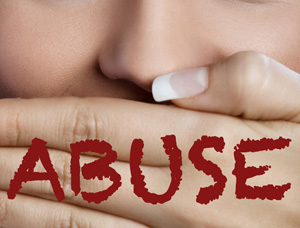
These are also some of the subjects sometimes found to be taboo.  To put it simply, we find it difficult to talk about them - finding tape put over our mouths. 

What I want to say, but never will, performed by the St. Ives Youth Theatre, is a collection of thoughts, emotions and experience compiled by Alan, an English teacher, of the things that young people in America really want to say and why they feel that they can't.

The thought that our young people feel unable to talk about what is on their mind, or that perhaps we as a Society are not prepared to listen is truly disturbing.  However, this show opens a window into their world and the constraining influences preventing - whether directly or not - the burst for self expression.  

Alan acts as the adult narrator, seeking to encourage each of the young people to come forward and tell their story.  He makes it clear that the show is not about him; which is why his character is taken on by a beautiful teenage girl - contrasted by the middle-aged, balding fat man - that we may expect.

One by one, the cast - all young people - dressed in theatrical black - reveal themselves.  However,  anyone can tell a story, what makes their tales unique is the controlling - even constraining - tape over their mouth.  The tape bears individual words and each word has meaning - bearing that back story - of the tale never told.

When the tape is peeled away, the young people speak; shout; cry and move all in dialogue with their fears.  We never see the reality.  We never know whether the cries are heard; real tears shed, gay children embraced or expelled; the pregnancy reaching child birth or the friendships continuing or ending.

This is the mystery of the performance.  It always leaves you wanting to ask a question and perhaps, you should.   

Of course, Alan admits that some of the stories, or things that young people want to say, lack context.  Some if it is just venting, frustration, hitting out or a need to release that built up angst.  The other stories are more important; abusive parents, self harming, not knowing what to do about an unexpected pregnancy or shouting, seeking and pleas for help.

Are we listening?  That is what Alan keeps reminding us.  Perhaps, more importantly, do we even want to listen?

Adults, whether a parent, guardian, priest or a friend are meant to be there to protect our children.  Who can our young people turn to if there is no one there to listen.

There are two sides to every story.  This is the subtle sometimes that Alan conveys too.  The adult figure may be willing to listen, but has the young person shut themselves off.  Perhaps, they do not understand their parents as much as they think?

This is what Alan advised me;

"What do you want to say but you know you never will?

To whom do you wish you could say it to?

Why won't you say it

This message is important.

Listen to me..."    
 Advice that you too, can take away.

A poignant performance, not best expressed in words alone.  See it and believe.

No five stars could do this show justice - it worth far more than that.

What I want to say, but never will is on at Sweet Venues, Grassmarket at 14.55.  The last performance is on Sunday 18th of August.  Tickets are available on-line from the Edinburgh Fringe box office, alternatively they can be purchased directly from the venue.    

For more information on the St. Ives Youth Theatre and the show itself, visit their website:
http://www.siyt.co.uk/wiwtsbnwe.html

Facebook: https://www.facebook.com/siytsayit
Twitter: @sity_sayit    
 

Wednesday, 14 August 2013

Edinburgh Fringe - Bent


Has the world really changed since Nazi Germany and World War Two?  How does society treat people from different backgrounds, if they are LGBT, disabled, not white or a Jew?

The cultural parallels relayed in Bent could not be more relevant to the modern day.  LGBT people facing persecution in Russia, Traveling People evicted by the law, Religious and National conflict based on who you are or where you are from.  As a Human Race, will be ever learn the lessons of the past?

At first glance, it is hard to see how this show could possibly be about the Nazis.

Starting off in a small cosmopolitan Berlin flat, one camp queen - a dancer nonetheless - and a more hetero centric and stoic gay man.  They are living together, drinking coffee following another outrageous night out.  The stereotypical chat about who did who and in what position, does not allude to the more sinister aspects to come.

The first indication that this show has a dark side comes when the couple discuss their landlord - "that dirty Jew" - indicating that the social segregation of German society has in fact begun.  You could have missed the reference, but the Gestapo storming the flat and slitting the throat of last night's sexual conquest gave the reality check that this was no joke!

The couple's struggle begins at this point, returning to what they believe to be their safe place - only to discover that their "friend" had taken money in an act of vitriolic betrayal.  Who can you trust is no one will take you in?

They are vagrant, lacking money, food and a place to stay.  Deprived of their identities by the Nazi State, no where to go.

Capture

Dragged through the woods like dead animals in the night.

This marked the transition; whatever was left of humanity died as they are transported to the Camp.  Death follows; the twisted Nazi psyche is at its best.  The protagonist, humiliated; forced to punch and kill his lover.

Survivial

Left alone, he deals in with the devil and adopts the Yellow Star of the Jew.  This, through is eyes is better than being the Pink Triangle of Queer.  He is no longer a "Fluff" but has become a montage of was formerly his dirty Jew.

Camp

Here an unexpected new relationship develops.  Can the dirty Jew develop a friendship and then something else with a Pink Triangle piece of Fluff?  This new relationship is built on rocks, routine and regrets.    

Silence

Nazi Nihilist entertainment kills in the final scenes of the show.  However, not before the unexpected reclamation of identity, a monologue of memories and a conscious decision not to let the Nazi's control our protagonist's life. 

The drama is powerful and emotive.

The show is deceptive and dark.

It deserves more than five stars.

Bent is on at C Venues, C too.  The Show is on at 22.10 and ends late.  To book tickets or to read more, visit the Edinburgh Fringe Online.  

To find out more about the show directly, visit Table9 Productions http://www.table9productions.com/index.php/edinburgh-fringe-festival/bent


Tuesday, 19 March 2013

"Cut services for women, increase services for men..".


A new political party has been launched in the UK which plans to stand candidates across the United Kingdom in the next General Election.  

The political party is called Justice for Men and Boys (and the Women who love them)

On a radio debate on the BBC's Call Kaye Programme, broadcast on Monday 18 March 2013, the party's founder, Mike Buchanan, advocated, amongst other things cutting services aimed at women, because men contribute more tax revenue to the UK Exchequer than they do. 

There is merit in highlighting any form of gender inequality where it exists.

I doubt anyone would disagree on this salient point.

On the tax revenue issue, it is important to highlight that the majority of part time workers are women, that women still receive only 75% of the pay of male comparators and that women are still under represented in the boardroom.

No surprise that the majority of tax generated comes from men then, eh?

I believe that the approach taken here, and the policies being espoused by this new political party, are ultimately counter intuitive.

Men deserve more, women less

The key mantra put forward seems to be that men deserve the support more so than women.

By setting each of the sexes against one another like this, the approach, in my view, is counter intuitive for the following reasons;

  • The approach taken works against the cause of campaigning for greater awareness of the inequalities which do exist between both men and women in the law, politics and social policy
  • It is too simplistic because throwing money at a particular problem, may not necessarily, address that problem and fails to actually examine and address the under lying reason for the inequality in the first place.    
  • By demanding resources are taken away from another group, to support your cause, there is a real risk of alienating allies and losing the argument. 

I wish to make clear from the outset that I do not subscribe to, nor support, the key political mantra of Justice for Men and Boys - I do not believe in removing support from women for the sake of it.

Health inequalities

The Following information is taken from the Men's Health Forum; which bases its information on statistics available from the Office of National Statistics.


It is important to note that rates of mental ill health between men and women are roughly equal.

Cause for concern

The illustrations given above are shocking.  They should, quite rightly, give any policy maker cause for concern.

However, what has caused, or continues to cause, such statistical inequality?

There is a range of sociological commentary on the subject.

Some of the reasons highlight,

  • the level of risk taking behaviour in young men, 
  • the rate of engagement with health care professionals by men - spotting a problem too late for instance.  
  • that men lack the basic health education to look after themselves properly.    

If you look at these reasons, it is unlikely that taking money away from support services for women and diverting those resources into support services for men will make an automatic difference.

Multi faceted problems

If you set up a men only service, how can you be certain that men will use that service, if you are already aware that there is a problem of engagement?

Similarly, how do you address risk taking behaviours?  Or re-educate men to know that going to their GP regularly is important?

The Equality Act

There is an obligation on the National Health Service to promote equality of opportunity, to eliminate unlawful discrimination and to foster good relations.  This is referred to as the Public Sector Equality Duty.

This important legal obligation is made up of "general duty" described above and a series of "specific duties", designed to give teeth to the general duty.

The general duty applied across Great Britain and there are different specific duties for UK wide public authorities and for Public Authorities exclusively working in Scotland and Wales.

The NHS is also required not to discriminate as a service provider, as an educator or as an employer.

It is clear that there is a legal obligation on the NHS and any other public service provider to tackle health inequalities.

It would be interesting to see, on a health board by health board basis, what is actually being done to address men's health and the particular inequalities highlighted above.

Current work

There are a number of efforts already under way to look at these particular problems.  One such approach, is to encourage men to attend "well men" clinics, changing the culture of engagement and education by encouraging male role models, such as footballers, to take a lead.

Tackle the inequalities

It is important that the health inequalities between men and women are addressed.

However, the view of Justice for Men and Boys, involves taking a sledge hammer to an identified problem and hoping that by smashing it to pieces, it will some how make it right.

Here is what the Scottish Association for Mental Health (SAMH) had to say about suicide rates and men:

You can find out more about Twotoomany by clicking this link.


Sunday, 17 March 2013

"Getting AIDS comes from unhealthy relationships"


On BBC The Big Questions, aired on Sunday 17 March 2013, a religious audience member stated live on BBC TV that "getting AIDS comes from unhealthy relationships".  He went on to reference Gay men and Lesbians.  

The Presenter of the the programme did not robustly challenge him concerning this contribution.  

It can be difficult on a live television discussion programme to ensure that audience participants in the show avoid making derogatory  offensive or prejudicial remarks.

However, the BBC must set some standards for its television presenters and audience participants, even if the show is the topic of Christianity and Modernity.

My primary objection to this particular contribution, is that it was allowed to go unchallenged.

The Presenter moved quickly onto the next contribution and encouraged the audience member to elaborate on his contribution.

Because of the show's religious element, the BBC permitted this particular contribution to be broadcast and also to go unchallenged.

The BBC knew, or ought to have known, that this contribution was both stigmatising and inaccurate.

Two resounding questions for the BBC

Why is it that linking someone's sexual orientation to the spread of AIDS makes acceptable Sunday morning television?

Why is sexual orientation always viewed as a moral issue, inevitably linked to sex and then promiscuity?

History repeating itself?

The comment referencing AIDS to being Gay reminded me of the ill-informed, offensive and "hate" campaigns that featured throughout the 1980s.

At this time, a series of national adverts were being run by the UK Government to make the public aware of HIV / AIDS.  However, the reactionary media, were more focused on linking AIDS to being Gay and being Gay to spreading disease - this is where AIDS got its first name - The Gay Plague.

Call to be vigilant

Has nothing changed?  Or is this just a one off example, of an ill-conceived, off the cuff comment, made to promote the virtues of a religious celibate life?

I would like to think that this is the case.

However, it does go to show that we must all be vigilant.  Public opinion and with it, government and legislative policy can be easily swayed by both positive and negative media portrayal.


"Stories in the media can have a positive effect in increasing people's awareness of HIV and what it means to live with HIV. However media reports about HIV are often stigmatising or inaccurate. Many stories contribute to a culture of blame about HIV transmission, focusing on so-called irresponsible sexual activity, use judgemental language and stereotype people living with HIV."

People who are either HIV positive or who have AIDS already face discrimination and stigma.

We must do all that we can to address this problem and to challenge those, particularly in the media, who would like to see us revisit recent history.


 The episode of The Big Questions is available on iPlayer by clicking here.  It is available for the next 7 days from today.  The Contribution in question was made approximately 28 minutes into the programme.  

I have made a complaint to the BBC.

If you wish to complain too, you can do so by following this link:-

http://www.bbc.co.uk/complaints/